ADR Cell

Promoting Alternative Dispute Resolution

ADR CELL
Our ADR Cell is a student-led initiative dedicated to promoting the understanding and use of Alternative Dispute Resolution (ADR) methods. Guided by our faculty, our enthusiastic students explore ADR techniques and their practical applications in legal practice. Through the Cell, we equip future lawyers with the skills and knowledge to resolve conflicts effectively and collaboratively, both inside and outside the courtroom. Our mission is to educate, empower, and inspire students to engage with ADR as a vital part of their legal education.

1st Intra-Negotiation Competition 2023

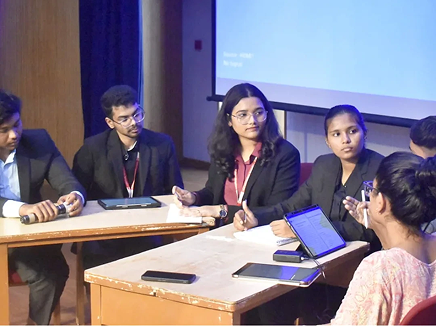
Our ADR Cell hosted the 1st Intra-Negotiation Competition 2023 on July 8th and 10th, marking the official inauguration of the Cell. The Competition aimed to provide students with the opportunity to participate in Negotiation Simulations and strengthen their deliberation skills. Four rounds were conducted, with the highest scoring participants progressing to subsequent rounds, culminating in a challenging final simulation judged by a panel of three judges. A total of 24 teams across various courses participated, and the Winners, First, and Second Runners-up were awarded during the valedictory programme, while all participants were recognized for their dedication and exemplary performance.
first-intra
ADR

Protecting Building Designs

We recognize that building designs can be protected through both utility patents, which safeguard functional aspects, and design patents, which protect ornamental features. Architectural firms often secure multiple patents for a single building to cover both functional and aesthetic innovations.
To be patentable, a design must be new, useful, and non-obvious. Newness requires that the invention has not been publicly disclosed prior to filing, usefulness ensures the design serves a purpose, and non-obviousness involves a legal evaluation of whether an ordinary architect would be motivated to combine existing designs to achieve the claimed invention.
Utility patents may protect functional elements such as integrated energy systems, lighting, or structural layouts, while design patents protect the ornamental features that give a building its unique aesthetic. Notable examples include the Manhattan Apple Store (D648,864) and other iconic structures with distinctive façades or architectural elements. By securing patents on both functional and ornamental features, architects can prevent imitation and preserve the value of their creative work.

COMPETITION DETAILS

Theme & Elements

Events

Awards

Team Composition

Each team must have 3 members; disclosure of institution identity is prohibited; maximum 30 teams.

Eligibility

Open to students enrolled in three-year or five-year law programs during the current academic year.